.png)
Warehouse and Supply Chain: A Guide to the warehouse and supply chain
Discover how the warehouse and supply chain drive efficiency, resilience, and growth with smart processes, tech, and 3PL partnerships.
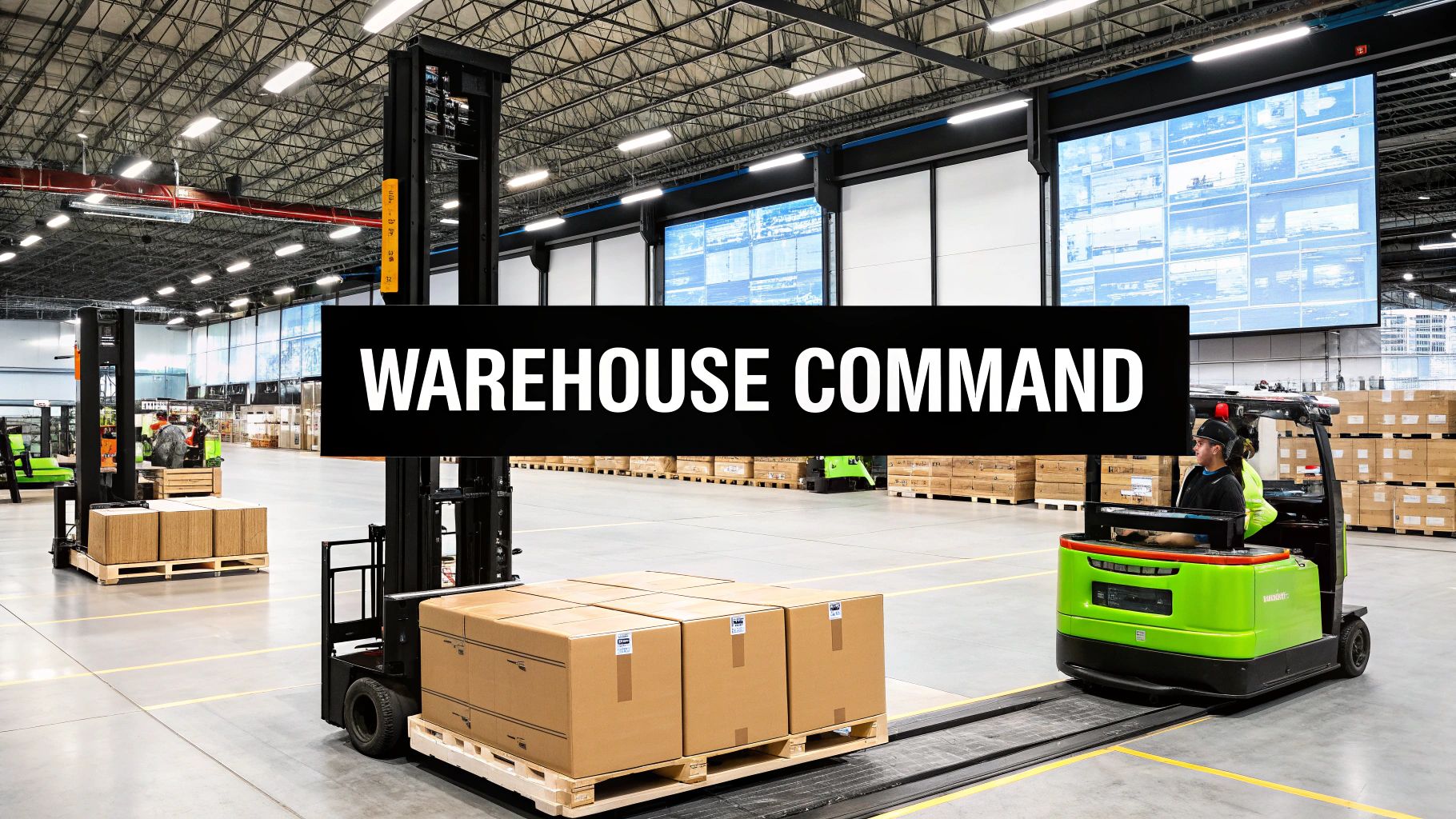

Let's get one thing straight: the old picture of a warehouse as some dusty, forgotten building packed with static boxes is completely wrong. Today’s warehouse is the beating heart of the supply chain—a dynamic command center that sets the pace for the entire operation. It's a high-tech, high-activity hub that's absolutely essential for keeping up with modern market demands.
The Warehouse Is Now Your Supply Chain Command Center
This isn't just a minor tweak or a passing trend. The shift from a simple storage shed to a strategic asset is a fundamental change, born out of pure necessity.
Think of it this way: a traditional warehouse was like a quiet library. Things went in, sat on a shelf for a while, and eventually came out. A modern warehouse, on the other hand, is much more like a bustling airport hub, where goods are constantly arriving, being sorted, redirected, and even improved before being sent on their way.
This evolution is a direct answer to the immense pressures of global business. The constant "I need it now" of e-commerce, the razor-thin margins of just-in-time manufacturing, and the sheer unpredictability of the market have forced the warehouse to get smarter and faster. It simply can't afford to be a passive bystander anymore.
The Strategic Role in Modern Operations
The value of a modern warehouse isn't measured by how much stuff it can hold, but by how quickly and effectively it can move and enhance products. This means its job has grown to include critical, value-added services that directly feed production lines and keep customers happy. These are the gears that make the entire supply chain engine turn.
A few of these key functions now include:
- Component Consolidation: Instead of getting ten different shipments from ten suppliers, the warehouse acts as a gathering point. It collects all the parts and creates one efficient, consolidated shipment, slashing freight costs and logistical headaches.
- Kitting and Sequencing: This is about perfect preparation. The warehouse pre-assembles kits or lines up components in the exact sequence the factory needs them, which means no more costly delays or fumbling around on the assembly line.
- Quality Control and Testing: It serves as a crucial quality gate. Components are inspected and tested before they ever get near the production floor, stopping defects and potential downtime in their tracks.
The modern warehouse is no longer just a cost center you see on a balance sheet. It’s a powerful engine for creating a real competitive advantage—one that can lower your total landed cost, boost factory output, and de-risk entire programs for OEMs and their partners.
Ultimately, you have to see your warehouse and supply chain as a single, interconnected system to survive and grow. In this guide, we'll break down how advanced processes, smart technology, and the right 3PL partnerships can transform a simple building into your most powerful operational weapon. It’s time to stop thinking of warehousing as a line item and start treating it as a strategic investment.
What Really Happens Inside a Modern Warehouse?
Forget the old image of a dusty building filled with static shelves. Today’s warehouse is the beating heart of a responsive supply chain—a place where raw inventory is actively transformed into production-ready components. These core processes are what turn a storage facility into a high-powered hub that drives manufacturing forward.
Let's cut through the buzzwords and look at what these services actually do for manufacturers on the ground. Each one is a direct solution to a common production headache, designed to cut costs, boost quality, and keep the assembly line moving at full speed.
This is where the magic happens, turning a warehouse into an integrated command center.
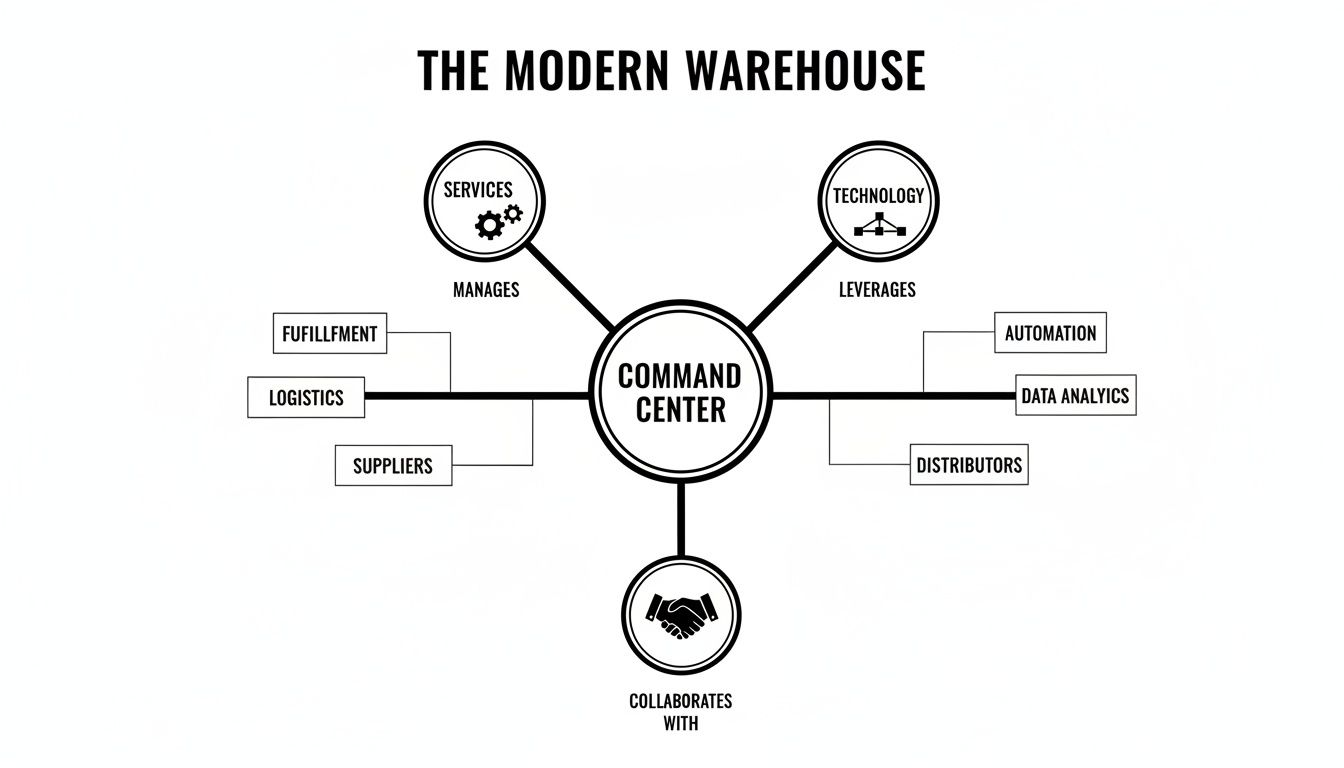
As you can see, these aren't standalone functions. They are all deeply connected, forming the bedrock of a tough, resilient warehouse and supply chain strategy.
Let’s take a closer look at the key value-added services that make this possible. The following table breaks down what each process involves and, more importantly, how it directly benefits an OEM’s operations.
Value-Added Warehouse Services and Their Impact
These services are the difference between a warehouse that simply holds inventory and one that actively improves your entire production process. They are proactive solutions that inject efficiency and quality control far upstream from the final assembly.
Kitting: Building Production-Ready Component Kits
Picture an assembly technician stopping their work to hunt for a specific nut, bolt, and washer for every single unit. That lost time, that "wasted motion," is a silent killer of productivity. Kitting solves this by bundling every part needed for a specific job into one convenient package.
Think of it like a meal-prep kit for your assembly line. Instead of grabbing individual ingredients, the worker gets one box with everything they need. This simple change has a massive impact, slashing assembly times and virtually eliminating the risk of using the wrong part.
For Original Equipment Manufacturers (OEMs), this creates a much more predictable and efficient assembly process—a must-have for hitting tight production targets.
Sequencing: The Key to Just-in-Time Assembly
Sequencing takes things a step further. It’s all about arranging components in the exact order they'll be used on the line. This is crucial in complex manufacturing, like the auto industry, where every car rolling down the line might have a different trim level or custom features.
If the line needs a black leather seat followed by a tan cloth one, the warehouse ensures they arrive in precisely that order. This gets rid of the need for bulky, space-hogging inventory right next to the line and prevents costly delays from workers searching for the right component.
Sequencing is the art of perfect timing. It ensures that the right part arrives at the right place at the exact moment it's needed, creating a seamless flow from the warehouse directly to the point of installation.
Consolidation: Slashing Freight Costs
Trying to manage inbound freight from dozens, or even hundreds, of suppliers is a logistical nightmare and a huge cost driver. Shipment consolidation tackles this head-on by turning many small, expensive shipments into fewer, much more cost-effective ones.
Instead of ten suppliers sending ten separate less-than-truckload (LTL) shipments, a 3PL partner routes them all to its warehouse. There, the goods are combined into a single full truckload (FTL) for the final leg to the manufacturing plant.
This strategy delivers some serious wins:
- Lower Transportation Costs: Full truckloads are dramatically cheaper per unit than running multiple LTLs.
- Simpler Receiving: Your plant unloads one truck instead of ten, freeing up precious dock space and labor.
- Less Paperwork: It streamlines the entire process of tracking and managing inbound deliveries.
Digging deeper, many of the efficiencies gained here are amplified by the benefits of a knowledge management system, which ensures processes are standardized and repeatable.
Pre-Production Testing: Your First Line of Defense for Quality
Finally, the warehouse acts as a critical quality gate. Performing pre-production testing and inspection before parts even get close to your assembly line is one of the most powerful ways to stop defects in their tracks and avoid crippling downtime.
This could be anything from a simple visual check to complex functional tests on electronics. By catching and isolating bad parts early, your 3PL partner protects the integrity of your final product. More importantly, it prevents one faulty component from shutting down your entire operation. This proactive quality check is fundamental to a reliable warehouse and supply chain system.
Integrating Technology for a Transparent Supply Chain
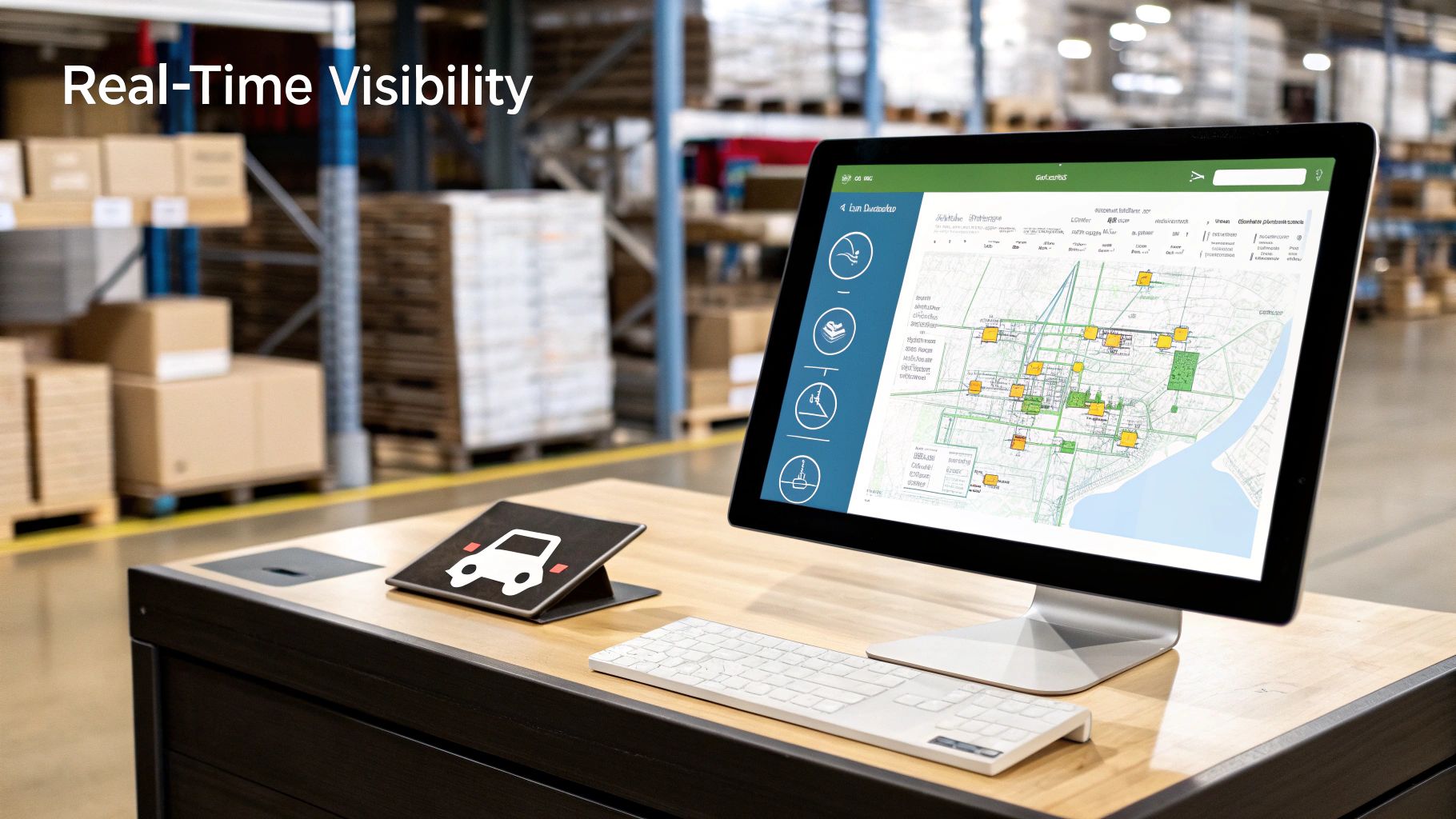
Technology is the invisible force knitting together every link in a modern supply chain. It's what turns a series of isolated steps into a single, cohesive operation. Without it, the advanced kitting, sequencing, and consolidation processes we've covered would simply grind to a halt. The real goal here is to achieve total visibility, wipe out manual errors, and build the kind of agile, responsive system that today's manufacturers absolutely depend on.
This digital backbone isn't about adding tech for tech's sake. It's about creating a single source of truth that everyone—from the person on the forklift to the executive in the boardroom—can trust. That shared understanding is what allows a complex, multi-layered supply chain to move with precision and speed.
PLEX ERP: The Supply Chain Central Nervous System
At the heart of this ecosystem is the Enterprise Resource Planning (ERP) system. The best way to think of a powerful ERP like PLEX is as the central nervous system for an entire manufacturing operation. It’s a unified software platform that connects everything from inventory levels and production schedules to customer orders and financial data.
Instead of having separate, siloed systems for each department, an ERP creates one shared reality. When a new order lands, the system can automatically check inventory, schedule production, and update financials in real time. This single action eliminates the dangerous "data lag" that so often leads to costly mistakes, like ordering parts you already have or promising a delivery date you can't possibly meet.
For a warehouse, this integration is non-negotiable. It means that all warehouse activities are perfectly synchronized with the real-time needs of the factory floor, creating a seamless flow of materials based on solid information, not guesswork.
EDI and ASN: The Universal Language of Logistics
While an ERP manages all the internal operations, a different kind of technology is needed for companies to talk to each other. This is where Electronic Data Interchange (EDI) comes in. Think of EDI as a universal translator that allows different companies' computer systems to speak the same language fluently.
Without it, exchanging mission-critical documents like purchase orders and invoices would be a slow, error-prone manual process involving endless emails, faxes, and phone calls. EDI automates this entire exchange, ensuring data is transmitted instantly and accurately between partners.
Building directly on this is the Advance Ship Notice (ASN), which is a specific and incredibly valuable EDI transaction. An ASN is essentially a digital heads-up that a supplier sends just before a shipment departs.
An ASN is much more than just a tracking number. It's a detailed digital manifest that tells the receiving warehouse exactly what is in the shipment, how it's packaged, and when it will arrive. This allows the warehouse team to prepare dock space, allocate labor, and plan for immediate putaway or cross-docking.
This level of preparation is a complete game-changer. It dramatically reduces the time it takes to receive goods, minimizes dock congestion, and ensures incoming materials are processed and ready for production almost immediately. We take a closer look at the power of these platforms in our guide to warehouse management system benefits.
The Future is Automated and AI-Driven
This integration of ERP and EDI forms the foundation, but the industry is rapidly moving toward even greater automation. This shift is being fueled by incredible advancements in robotics and artificial intelligence that are completely redefining what’s possible inside a warehouse.
The global warehouse automation market is projected to hit $63 billion by 2030, with a remarkable 26% of warehouses expected to be fully automated by 2027. This explosive growth is driven by the rise of AI in logistics, which alone reached $20.8 billion in 2025 after a staggering 45.6% compound annual growth rate since 2020.
Imagine warehouses where AI doesn't just assist but actually anticipates every move. Predictive demand forecasting, for instance, now slashes stockouts and overstock by 25-40% by crunching historical sales, seasonal trends, and even weather patterns.
This fusion of technologies—from foundational ERP systems to predictive AI—is what makes the transparent, efficient, and resilient warehouse and supply chain operations of modern manufacturing possible.
Building Resilience Against Supply Chain Risks
The idea of a perfectly stable, predictable supply chain is a fantasy in today's global economy. If you're still just reacting to problems as they happen, you're not just being inefficient—you're taking on a massive liability. To navigate the constant waves of geopolitical tensions, sudden tariff changes, and unexpected global crises, you need a proactive, fortified strategy.
Your warehouse is the bedrock of that strategy. It's so much more than a place to store boxes. A strategically placed and expertly managed warehouse acts as a critical buffer against disruption. Think of it as the shock absorber for your entire operation, protecting you when external forces try to grind everything to a halt.
This defensive posture is what allows you to build real resilience directly into your daily operations, turning unavoidable uncertainty into a manageable part of the plan.
From Reactive Fixes to Proactive Defense
The modern risk landscape is a complex, moving target. The data paints a pretty stark picture of this new reality. The 2025 WTW Global Supply Chain Risk Report found that a mere 8% of businesses feel they have their supply chain risks fully under control.
Even more telling, a staggering 63% reported higher-than-expected losses from things like geopolitical instability, cyber threats, and supplier failures. This is a big shift from 2023, when pandemic-related issues fell from 23% to just 13% of top concerns. The focus has clearly pivoted to new, persistent threats.
To fight back, smart companies are getting proactive. They’re setting up cross-functional risk teams, investing in supply chain mapping technology, and demanding tighter cybersecurity from their partners. But these plans have to be grounded in physical, real-world capabilities. This is where the warehouse really proves its worth by enabling two powerful tactics: maintaining safety stock and diversifying your supplier base.
A well-run warehouse makes it possible to hold that buffer inventory from multiple sources without overwhelming your primary production facility with a mountain of excess parts.
The table below outlines some of the most common risks and how a strong warehousing strategy provides a direct line of defense.
Common Supply Chain Risks and Mitigation Strategies
These examples show how the warehouse isn't just a passive storage space; it's an active, strategic asset for neutralizing threats before they can impact your bottom line.
The Role of Compliance in Risk Reduction
In the world of manufacturing—especially for OEMs and their Tier 1 partners—compliance standards aren't just bureaucratic hoops to jump through. They are the essential frameworks for ensuring quality, consistency, and, most importantly, risk management. Following rigorous standards like ISO 9001 and IATF 16949 is a non-negotiable part of building a resilient supply chain.
Let's quickly break down why they matter so much:
ISO 9001: This is the global benchmark for a Quality Management System (QMS). It’s all about making sure your processes are documented, repeatable, and consistently deliver what the customer expects. In a warehouse, this means every single step, from receiving to kitting, is standardized to eliminate errors.
IATF 16949: Built specifically for the automotive industry, this standard takes ISO 9001 and turns up the dial. It demands an intense focus on defect prevention, minimizing variation, and slashing waste throughout the supply chain.
Adherence to these standards is a clear signal to OEMs that a 3PL partner operates with discipline and precision. It proves they have the systems in place to protect product quality and ensure a reliable flow of compliant components, effectively de-risking a critical portion of the supply chain.
When you partner with a 3PL that holds these certifications, you're essentially outsourcing a huge piece of your risk management burden. You gain a partner who is already equipped with the proven controls and processes needed to meet the highest industry demands, protecting your business and strengthening your relationships with your most important customers. Building a robust framework is one of the most important supply chain risk management strategies you can implement.
How to Choose the Right 3PL Partner
Picking a third-party logistics (3PL) provider isn’t just another line item on a spreadsheet; it’s a strategic move that can make or break your supply chain. When you’re choosing a partner, you have to look past the sticker price and dig into the capabilities that actually matter—especially for Midwest OEMs who are under constant pressure to deliver.
Think of the right partner as an extension of your own team. They should be so integrated into your operations that they feel like your own department, giving you a real competitive edge. This means you’re not just hiring a vendor; you’re bringing on a strategic ally.
Look Beyond Price to Core Competencies
Of course, cost matters. But the cheapest quote often hides bigger problems that will cost you far more down the line—think production shutdowns, quality issues, and a damaged reputation. A low-ball offer can be a major red flag.
Instead, focus your evaluation on what truly counts:
- Real Industry Experience: Do they genuinely get your world, whether it's automotive or heavy industrial manufacturing? A partner who already knows OEM expectations will have the right quality controls and operational discipline built into their DNA.
- Proven Tech Chops: Smooth system integration is a must-have, not a nice-to-have. Your potential partner needs to prove they can work fluently with your core systems, like PLEX ERP, and have solid EDI/ASN capabilities to keep data flowing without a hitch.
- Strategic Location: For manufacturers in the Midwest, geography is everything. A 3PL situated near your key manufacturing hubs can drastically cut transit times, slash freight costs, and make a responsive, just-in-time material flow a reality.
Asking the Right Questions
To find out if a 3PL really has what it takes, you need to ask questions that cut through the sales pitch. You're looking for proof, not promises.
A partner’s value isn't found in what they promise, but in what they have already delivered. Ask for specific, quantifiable examples of how they have solved problems for businesses similar to yours.
Try asking questions like these to get to the heart of the matter:
- "How do you guarantee quality control and maintain compliance with standards like IATF 16949?" This directly tests their commitment to the tough quality frameworks required by major OEMs.
- "Walk me through a real-world example of a process improvement you implemented for a client like us." This shows whether they have a culture of continuous improvement and can deliver tangible results.
- "What’s your game plan for handling a major disruption, like a supplier suddenly going offline or a massive logistics delay?" This reveals how well they handle risk and whether they have a solid contingency plan.
Aligning on a Shared Strategic Vision
At the end of the day, the best 3PL partnership is built on a shared vision. Your provider shouldn’t just understand your immediate needs; they should get where you’re trying to go in the long run. They need to be proactive problem-solvers, always hunting for ways to improve your warehouse and supply chain operations.
This kind of alignment is more important than ever. In 2025, new tariffs sent shockwaves through supply chains, with 82% of executives reporting direct impacts. Survey data showed 39% were hit with supplier cost increases and 30% saw customer demand fall, triggering a mad dash to rethink sourcing. A strong partner helps you see these challenges coming and navigate them together.
For a great example of how technology can build this kind of resilience, look at DHL's AI predictive maintenance in logistics, which helps slash operational downtime. That level of foresight and tech-savvy is what separates a true partner from just another vendor.
Turning Your Warehouse into a Competitive Edge
We’ve covered a lot of ground, from how the modern warehouse and supply chain has evolved into a high-tech nerve center to the specific processes and tech that make it all tick. But if there’s one big idea to take away, it’s this: the warehouse isn't just a cost on your P&L sheet anymore. It’s a powerful engine for building a real, sustainable competitive advantage. That shift in mindset is what separates the leaders from the laggards.
It’s time to stop thinking of your warehouse as just four walls and a roof—a logistical box to be checked. Instead, see it as a strategic investment in a more agile, resilient, and efficient operation. Getting this right is how you win in a market that never sits still.
From Cost Center to Value Creator
So, how do you make the leap? It starts by blending advanced processes, smart technology, and the right partnerships. When you bring in value-added services like kitting, sequencing, or pre-production testing, you’re pushing quality and efficiency upstream, long before a single part hits your assembly line. This is about being proactive, not reactive, which is a surefire way to prevent expensive downtime and protect your margins.
At the same time, tools like PLEX ERP and EDI/ASN integration knit everything together into a single, reliable source of truth. This kind of transparency gets rid of the guesswork and manual errors, allowing your entire supply chain to move with the kind of precision and speed that was once impossible.
The future belongs to companies whose supply chains are as smart and adaptive as the products they build. A strategic warehouse isn't just part of that future—it's the foundation.
Finding the right 3PL partner is often what makes this vision a reality. A great partner isn't just renting you space; they're an extension of your own team, bringing deep industry knowledge and a relentless drive for improvement to the table. They help turn your warehousing from a fixed overhead cost into a flexible, scalable asset that can pivot with market demand—all without you needing to make a massive capital investment. It’s the final piece of the puzzle that creates a supply chain that’s not just efficient but truly resilient. You can take a closer look at what it takes to build a warehouse designed for today's challenges.
The bottom line is a clear call to action. By investing strategically in your warehousing—whether you build it in-house or team up with a trusted 3PL—you’re creating an operational backbone strong enough to support real growth, handle disruptions, and give you that decisive edge in the market.
Common Questions About Modern Warehousing
Even with a solid plan, the world of modern warehousing and supply chain management can be tricky. Let's tackle some of the most common questions that come up, cutting through the noise to give you clear, practical answers.
Think of this as a quick field guide to reinforce why a strategic approach to warehousing is so critical.
What Is the Difference Between a Warehouse and a Distribution Center?
People often use these terms interchangeably, but they serve fundamentally different functions. A traditional warehouse is all about long-term storage. Picture it as a savings account for your inventory—its main job is to keep goods safe and sound over time.
A distribution center, on the other hand, is built for speed and movement. It’s more like a high-traffic checking account. The focus here isn't on sitting still; it's on value-added services like kitting, cross-docking, and fulfilling orders to push products through the supply chain as efficiently as possible. It's all about velocity.
How Does a 3PL Actually Reduce My Supply Chain Costs?
A good 3PL partner saves you money in ways that go far beyond just negotiating better freight rates. For starters, you avoid the massive capital investment required for buildings, technology, and hiring a specialized workforce. That's a huge upfront cost wiped off your books.
They also bring expertise in inventory management that helps prevent the financial drain of overstocking or the production-halting pain of stockouts. By consolidating shipments with other clients, they create economies of scale you simply can't achieve on your own.
But the real magic is in the value-added services. When a 3PL performs pre-production quality checks, they stop expensive defects from ever hitting your assembly line. That saves you from the nightmare of downtime and rework costs.
The true cost savings from a 3PL partner come from risk mitigation and efficiency gains. By preventing costly errors and optimizing the flow of goods, they lower your total landed cost, not just individual line items.
What Are the First Steps to Integrating Our ERP with a 3PL?
Getting your systems to talk to a 3PL’s system starts with a simple conversation. A great partner will kick things off with a collaborative discovery session to map out your current processes and nail down exactly what data you need to share. This means defining communication protocols, like which specific EDI transaction sets you'll be using.
From there, their IT team should conduct a gap analysis to spot any potential integration hurdles before they become problems. They'll then build a detailed project plan that includes a critical testing phase. This happens in a "sandbox"—a safe, separate environment where you can ensure everything works flawlessly before flipping the switch.
Success here is all about open communication and making sure everyone is on the same page about the technical goals right from the start.
Ready to transform your warehousing strategy from a cost center into a competitive advantage? At Wolverine Assemblies, LLC, we integrate people, process, and technology to deliver resilient and efficient supply chain solutions for the Midwest's leading manufacturers. Learn how our value-added services can de-risk your operations and scale your production.
Subscribe to our weekly newsletter