.png)
What is 3pl logistics? A Guide to what is 3pl logistics
What is 3pl logistics? Learn how outsourcing warehousing and transport can streamline your supply chain and cut costs (what is 3pl logistics).
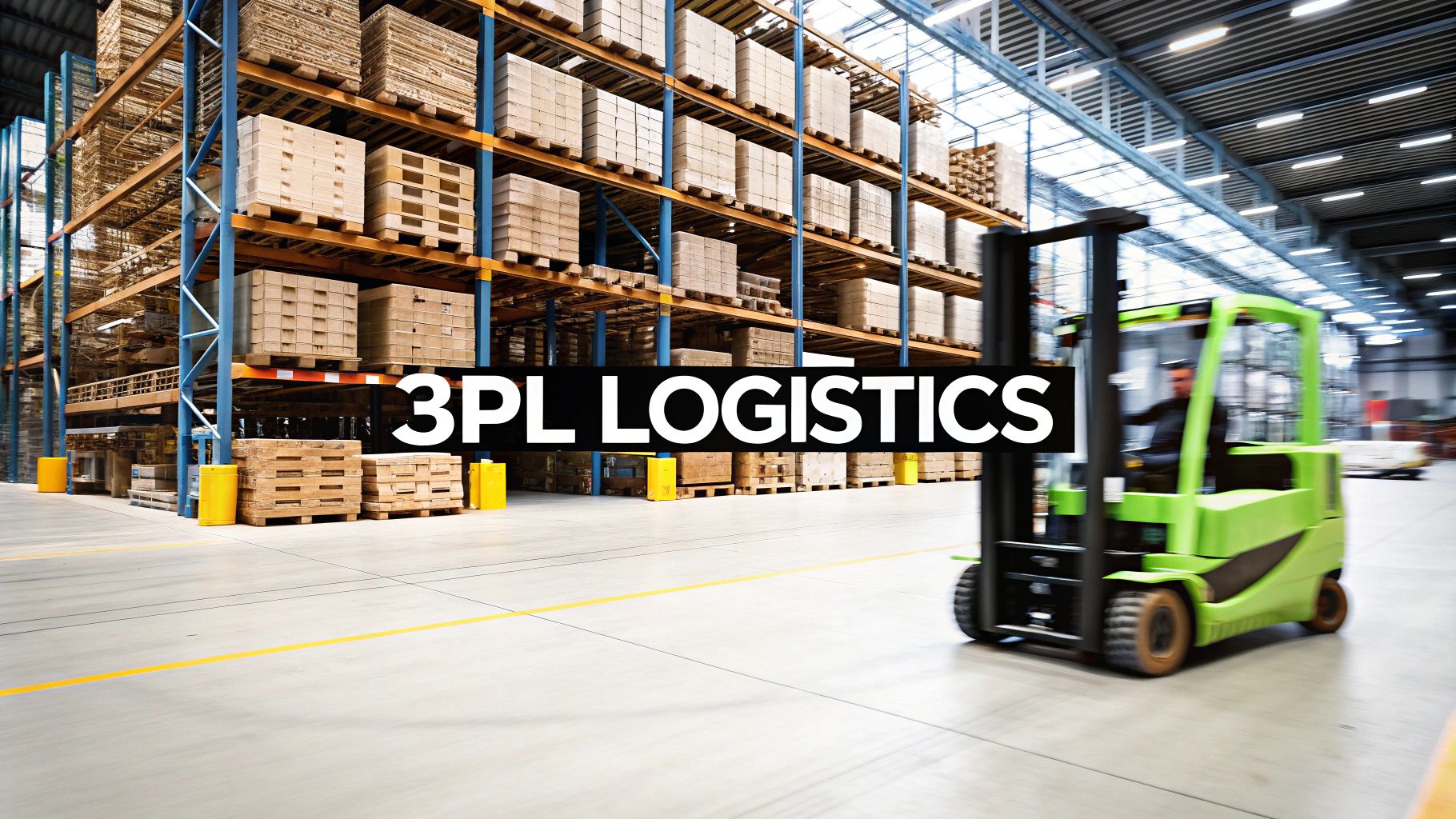

Here’s the simple truth: Third-party logistics (3PL) is the strategic outsourcing of your company's warehousing, transportation, and distribution to a specialized partner. But that definition barely scratches the surface. Think of a 3PL as a dedicated mission control for your supply chain—a team of seasoned experts managing every moving part so you can focus on what you do best.
Understanding 3PL Logistics Beyond the Definition
For OEMs, Tier 1 suppliers, and industrial manufacturers, bringing in a 3PL isn't a luxury; it’s a competitive necessity. It’s about turning complex operational headaches into real opportunities for better efficiency, lower costs, and happier customers. This kind of partnership lets you expand your logistics capabilities without the massive capital investment that comes with buying buildings, trucks, and technology.
Instead of getting bogged down in warehouse leases, vehicle fleet management, and hiring logistics staff, you can plug directly into the established infrastructure and deep expertise of a provider. This frees up an incredible amount of capital and lets your leadership team get back to focusing on product innovation, engineering, and manufacturing excellence.
From Cost Center to Strategic Asset
The real magic of a good 3PL is its ability to transform logistics from a reactive cost center into a proactive, strategic asset. That shift is absolutely critical in industries where timing, accuracy, and compliance are non-negotiable. An effective 3PL partner doesn't just work for you; they integrate deeply into your operations and become a true extension of your own team. They learn to anticipate your needs, solve problems before they can disrupt production, and keep materials flowing exactly when and where they’re needed.
This model is especially powerful for businesses dealing with:
- Complex Assemblies: Coordinating a dizzying number of components is their specialty.
- Just-in-Time (JIT) Production: They understand that even a small delay can bring an entire assembly line to a halt.
- Fluctuating Demand: They provide the flexibility to scale operations up or down at a moment's notice.
- Strict Compliance Standards: They live and breathe the rigorous requirements of the automotive, energy, and agricultural sectors.
Core 3PL Functions and Their Strategic Impact
To better understand how a 3PL adds value, it's helpful to break down their core functions and connect them to direct business outcomes. Each service is designed not just to move or store goods, but to solve a specific operational challenge.
By bundling these functions, a 3PL partner creates a seamless, integrated system that removes friction from your supply chain, allowing you to operate with more agility and confidence.
The Economic Impact and Growth
The move toward third-party logistics isn't just a passing trend; it's a major economic driver. In the U.S. alone—a critical hub for automotive and manufacturing giants—the 3PL sector has exploded, reaching an estimated market size of $246.25 billion. This growth reflects a fundamental shift in how modern businesses are building more resilient and efficient supply chains.
By outsourcing logistics, companies gain access to economies of scale and advanced technologies that would be otherwise unattainable, turning supply chain management into a source of competitive advantage.
Ultimately, understanding what 3PL logistics is all about is the first step toward optimizing your entire operation. A strong partner shoulders the immense complexity of warehousing and transportation, giving you the stability needed to grow. By taking a holistic view, a 3PL can streamline everything, which is a key component of a successful end to end supply chain management strategy.
Exploring the Full Spectrum of 3PL Services
A genuine third-party logistics partnership goes far beyond just providing a warehouse and a truck. The best 3PLs offer layered services, starting with the fundamentals and building up to highly specialized solutions that plug directly into a manufacturer's production process. To really understand what 3PL is all about, you need to see this full picture.
At its foundation, any 3PL relationship is built on two pillars: warehousing and transportation. Warehousing gives you the physical space and systems for tight inventory control, while transportation management wrangles the complex web of getting materials in and finished products out. These are the absolute basics—the operational backbone of the entire system.
But the real magic happens with value-added services. These are the specialized tasks that elevate a 3PL from a simple vendor to a critical extension of your own operations team. For OEMs and Tier 1 suppliers, these services aren't just a nice-to-have; they're essential for keeping production lines lean and humming.
This visual gives you a quick breakdown of the core 3PL service hierarchy, showing how a partner sits at the top, directing the foundational elements of the supply chain.
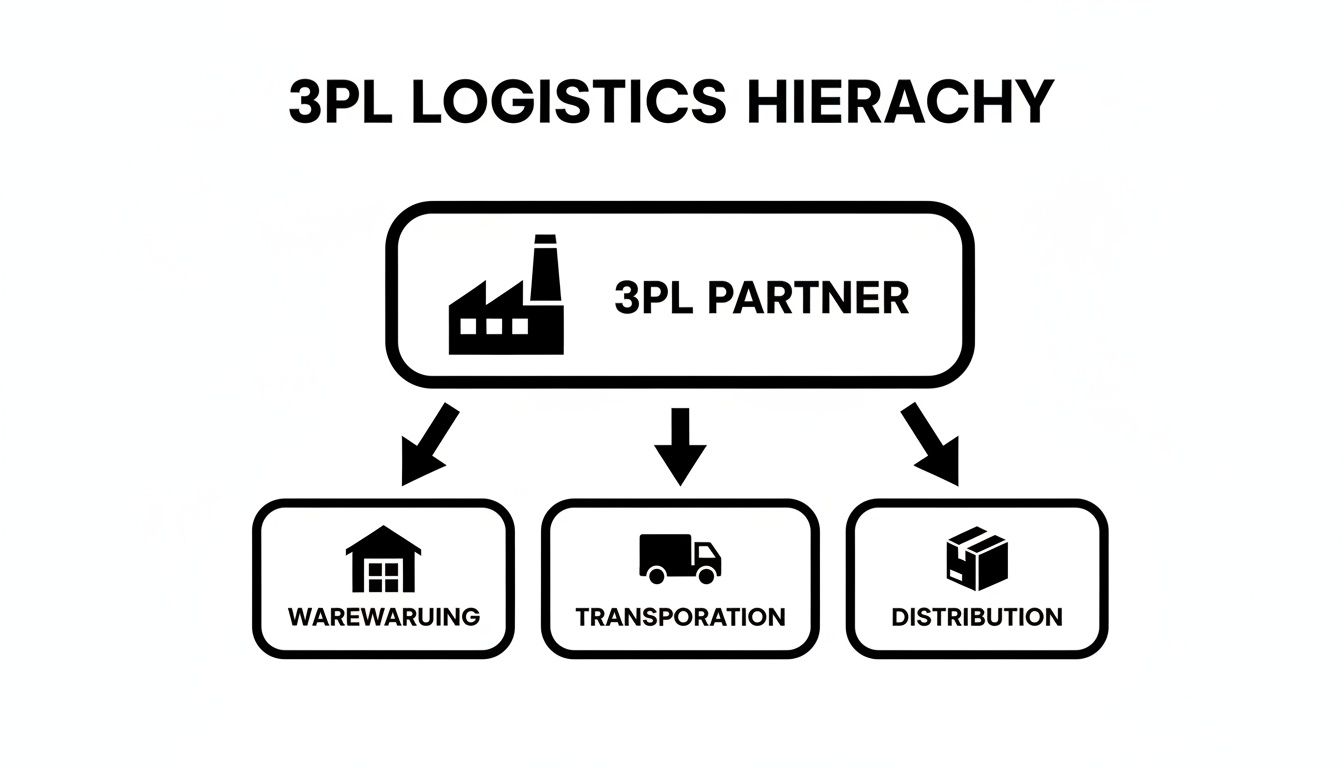
As you can see, a true 3PL partner integrates warehousing, transportation, and distribution into one cohesive operation.
Moving Beyond Basic Storage
The most transformative services are the ones that take place inside the warehouse, long before a component ever gets near an assembly line. These solutions are engineered to solve major manufacturing headaches by making sure parts are perfectly prepped for production.
Think about it. Instead of your facility getting bombarded with dozens of separate boxes from all over the world, a 3PL can manage that entire chaotic inflow upstream. They receive it all, inspect it, and organize it off-site.
This strategy is catching on fast. In industrial sectors like automotive, value-added warehousing is growing at a 7.55% CAGR in the U.S., which is a powerful complement to domestic transportation's massive 47.55% market share. On a global scale, the 3PL market is expected to balloon from $1,260.98 billion in 2025 to $2,502.22 billion by 2033, underscoring just how much companies are coming to rely on these sophisticated services. You can dig into the numbers in the full Mordor Intelligence report.
Key value-added services include:
- Component Consolidation: Your 3PL becomes a central receiving hub for parts from numerous suppliers. They consolidate everything into a single, organized inventory stream, slashing the number of inbound trucks you have to manage.
- Quality Inspection & Testing: Parts are inspected, tested, and verified against your quality specs the moment they arrive at the 3PL. This catches defects early, ensuring a faulty component never has a chance to shut down your production line.
- Sub-Assembly: Light manufacturing and assembly tasks are handled by the 3PL. They can combine several small parts into a single module that’s ready to be installed, saving you precious time and labor on the main assembly floor.
Precision Services for the Production Line
Building on that foundation, a top-tier 3PL can deliver components with surgical precision, timing their arrival perfectly with your production schedule. This is where a partner proves their worth in a high-stakes, just-in-time (JIT) environment.
A world-class 3PL doesn't just manage inventory; they orchestrate its flow. The goal is to deliver the right part, to the right place, at the exact right moment, removing all complexity from the line side.
Two of the most critical services here are kitting and sequencing. They sound similar, but they solve different problems.
- Kitting: This is all about gathering the individual components for a specific assembly step and bundling them into one convenient package, or "kit." An assembly worker doesn't have to pick ten different fasteners from ten different bins; they get one kit with everything they need. This makes their job faster and slashes the risk of errors.
- Sequencing: This takes kitting to another level. Sequencing is about delivering those kits—or individual parts—to the assembly line in the exact order they are needed. In a car plant where every vehicle has custom options (think trim level, color, or a sunroof), the 3PL makes sure the correct steering wheel arrives just as that specific car chassis rolls into position.
By taking on these intricate tasks, a 3PL empowers manufacturers to simplify their own facilities, shrink line-side inventory, and boost their first-pass yield. You can explore how these solutions come to life in our guide on value-added warehousing services. The final result is a more resilient, efficient, and cost-effective supply chain.
What Are the Real-World Benefits of a 3PL Partnership?
So, what does this all mean for your bottom line? The theory is nice, but the decision to outsource your logistics really comes down to the tangible business advantages. Essentially, you're swapping massive, fixed overhead costs for a much more manageable and flexible operational expense, letting you get back to what you do best: designing and building great products.
The most obvious win is a dramatic reduction in costs. The capital needed to build, staff, and run a modern warehouse is staggering. We're talking real estate, forklifts, sophisticated warehouse management software (WMS), and a full-time workforce. A 3PL partnership wipes those massive capital investments right off the table, freeing up cash for R&D, new production lines, or market expansion.
Fine-Tuning Your Operational Efficiency
Beyond the initial savings, a good 3PL brings a level of operational know-how that’s tough to build in-house. Logistics is their entire world. They've spent years honing their processes across hundreds of clients, giving them a unique ability to spot inefficiencies and optimize workflows in ways a manufacturing-focused company simply wouldn't see.
This expertise means your receiving, inventory management, and shipping become faster and more precise. For an OEM, that means a more predictable and stable supply chain, which is critical for preventing those dreaded line-down scenarios that kill productivity.
A truly great 3PL isn't just a vendor executing tasks—they become a continuous improvement engine for your supply chain. You're effectively gaining a dedicated team of logistics experts whose sole focus is making your operation leaner and more responsive.
Plus, they bring their network to the table. They have long-standing relationships with freight carriers, allowing them to negotiate better rates and secure capacity, especially when things get tight. That kind of leverage is nearly impossible for a single company to replicate on its own.
Gaining the Agility to Scale and Sidestep Risk
Demand is never a flat line. It spikes and dips with product launches, economic shifts, and seasonal cycles. If you're managing your own warehouse, you’re constantly wrestling with this. You either have too much space and too many people on the payroll during a lull, or you're scrambling to keep up during a surge. Both scenarios are expensive.
This is where a 3PL provides crucial scalability. Their entire model is built on flexibility.
- Ramping Up: Need to support a major product launch or seasonal peak? A 3PL can instantly bring on more space, labor, and trucks to handle the volume. You don't have to worry about hiring temps or finding a short-term warehouse lease.
- Scaling Back: When things quiet down, your costs scale down accordingly. You’re only paying for what you use, turning a fixed liability into a variable cost that protects your margins.
This built-in agility is also a powerful tool for risk mitigation. Supply chain disruptions are a fact of life, from port congestion to carrier strikes and severe weather. An experienced 3PL has seen it all and has contingency plans ready to go. If one freight lane is jammed, they can quickly pivot to another carrier or route, keeping your parts moving and your production lines running. In today's volatile global market, that kind of resilience is invaluable.
Ultimately, all of these benefits—cost savings, efficiency, scalability, and risk management—point to one critical outcome: happier customers. When you can promise reliable, accurate, and on-time delivery and actually follow through, you build the kind of trust that keeps customers coming back.
Integrating Technology for a Seamless Supply Chain
A successful 3PL partnership isn’t just about warehouses and trucks; it’s about the digital backbone that connects everything. Technology is the nervous system of a modern supply chain, turning a series of separate tasks into a single, fluid, and transparent operation. Without that solid tech integration, even the best plans can get bogged down by manual errors, delays, and a total lack of visibility.
For an OEM or Tier 1 supplier, this digital connection is absolutely non-negotiable. It's how you get real-time control over inventory that's miles away and how you make sure every part shows up exactly when and where it's needed. The right tech turns a 3PL from a simple service provider into a true extension of your own team.
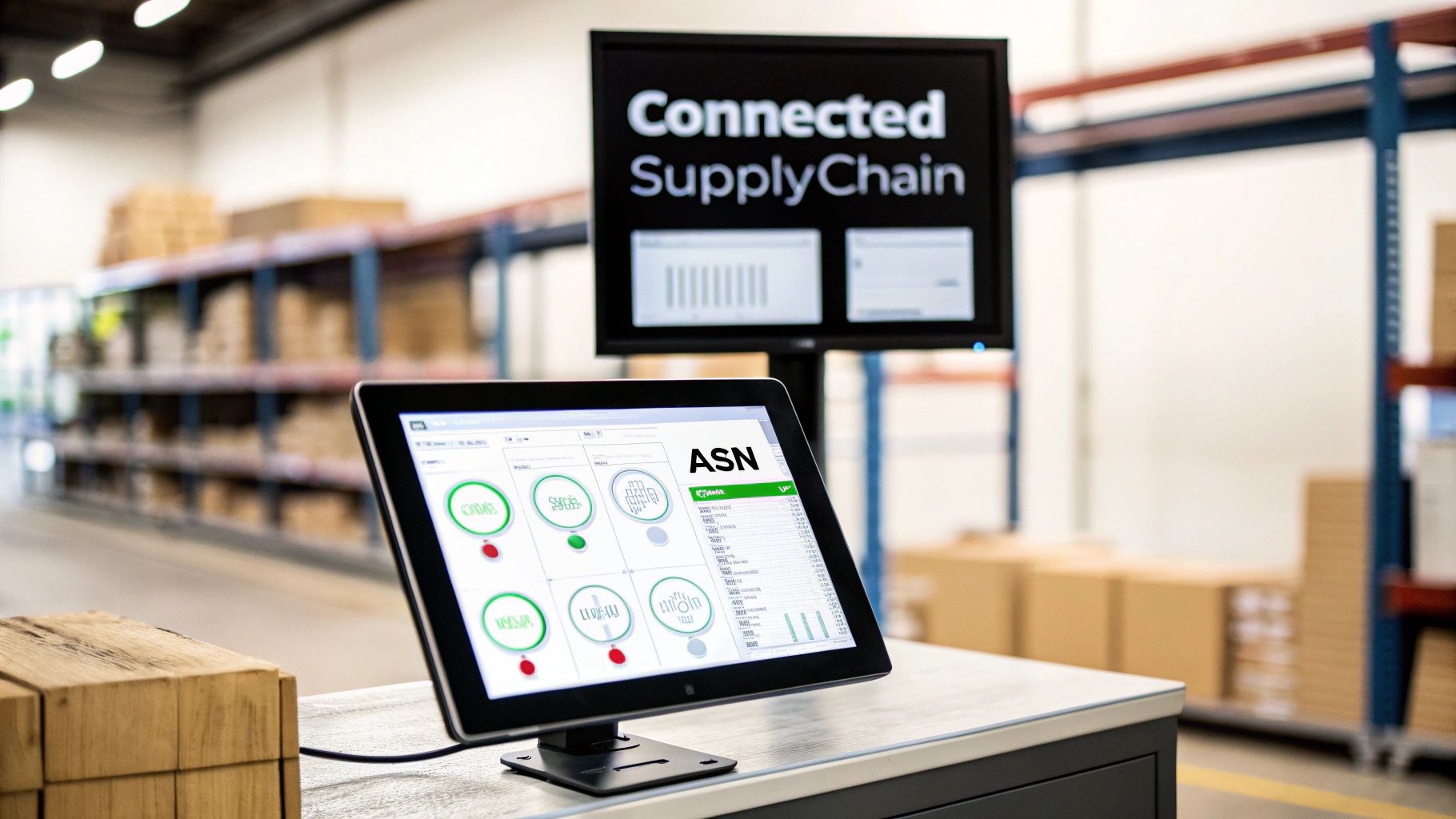
Automating the Flow of Information
At the core of this integration are systems that let different companies' computers talk to each other without human intervention. This cuts out the endless emails, phone calls, and manual data entry—all of which are breeding grounds for expensive mistakes. Two of the most critical tools here are EDI and ASN.
- Electronic Data Interchange (EDI): Think of EDI as a universal translator for business documents. It allows a manufacturer’s system to send purchase orders and shipping requests directly to the 3PL’s system in a standard format, and vice-versa. Data is exchanged instantly and accurately, taking human error out of the picture.
- Advance Shipping Notices (ASN): An ASN is really a digital packing slip, sent via EDI. Before a shipment even leaves the 3PL's dock, an ASN is sent to the manufacturer detailing exactly what’s in the shipment, how it's packed, and when it will arrive. This gives the receiving facility a critical heads-up, letting them plan for the labor and dock space needed for a smooth unload.
These automated messages are fundamental to the speed and precision demanded in today's manufacturing world. They create a predictable, reliable flow of information that perfectly mirrors the physical flow of goods.
The Central Nervous System: An ERP
While EDI and ASNs handle the conversation between partners, a powerful Enterprise Resource Planning (ERP) system manages everything within the 3PL’s four walls. The ERP is the central hub—the single source of truth for all operational data. It weaves every function together, from inventory management and order processing to labor tracking and shipping, all on one cohesive platform.
A sophisticated ERP system provides complete, real-time visibility into every aspect of the logistics operation. It’s what allows a 3PL partner to make data-driven decisions that optimize efficiency and ensure compliance.
For instance, a tech-forward 3PL like Wolverine Assemblies runs on a robust system like PLEX ERP. This gives both their team and their clients immediate access to critical information:
- Real-time inventory levels for every single component.
- The status of every inbound and outbound order.
- Complete traceability data, tracking a part’s journey from receiving to shipment.
- Performance metrics and reporting dashboards.
This transparency is vital. For a truly integrated supply chain, many 3PLs are exploring how data analytics and IoT solutions can further boost visibility and sharpen decision-making. This level of integration ensures the 3PL isn’t a black box; it's a fully visible extension of the client's own operations.
Ensuring Compliance and Control
For OEMs, following strict standards is everything. A tech-enabled 3PL builds compliance directly into its processes using its systems. Barcode scanning at every touchpoint ensures 99%+ inventory accuracy, while the ERP enforces quality control workflows, tracks lot numbers for traceability, and generates the specific labels and documents required by the end customer.
This digital paper trail provides the hard data needed to prove compliance, giving OEMs the control and peace of mind to entrust a partner with a critical piece of their supply chain.
How 3PLs Structure Their Pricing and Measure Success
Before you shake hands on a partnership, you need to get into the weeds of how it's all going to work—both financially and operationally. Agreeing on the pricing model and the metrics for success isn't just a formality; it's about setting clear, shared expectations from the get-go. This is how you build a relationship based on accountability, not assumptions.
A good pricing model shouldn't have any hidden surprises. It should directly tie the 3PL's success to your own. While there are plenty of hybrid approaches, most agreements are built on one of three foundational models.
Common 3PL Pricing Models
The best model for your business comes down to your operational needs. Are your volumes predictable? How deep of a partnership are you looking for? The goal is always the same: find a structure that delivers real value without compromising on the quality of service.
- Transactional Pricing: This is the most straightforward, pay-as-you-go approach. You pay a set price for each individual activity—storing a pallet, picking an order, or handling a shipment. It’s a great fit for companies with seasonal spikes or anyone just dipping their toes into outsourcing.
- Cost-Plus Pricing: Here, you pay the 3PL's direct operational costs plus a pre-negotiated management fee or percentage markup. This model gives you total transparency into where your money is going and is often used in complex, long-term partnerships where the 3PL truly functions as an extension of your own team.
- Fixed-Rate Pricing: With this model, you pay a single, predictable fee every month or quarter for a clearly defined set of services. This makes budgeting a breeze, but it only works if your scope of work is stable and well-understood by both parties.
Getting the pricing right is half the battle. The other half is making sure you’re getting what you paid for.
Defining Success with KPIs and SLAs
Once the financial structure is in place, the conversation shifts to performance. This is where Key Performance Indicators (KPIs) and Service Level Agreements (SLAs) come into play. Think of the SLA as the formal contract that outlines the service standards. The KPIs are the specific, hard numbers you use to track whether your partner is actually hitting those standards.
An SLA without clear KPIs is just an empty promise. For an OEM or Tier 1 supplier, these metrics are the tangible proof that your 3PL partner is delivering on its commitment to precision, timeliness, and quality.
If you don't measure it, you can't manage it. Vague goals only lead to vague results. In the world of what is 3pl logistics, setting specific, measurable targets is non-negotiable.
Here’s a look at the data that truly matters for industrial and automotive clients.
Essential 3PL KPIs and What They Mean for Your Business
Tracking the right metrics is fundamental to a healthy 3PL partnership. These KPIs provide a clear, objective view of performance and create a baseline for continuous improvement.
By agreeing on these metrics upfront, you establish a clear framework for accountability. This ensures your 3PL partnership isn't just a cost center, but a genuine driver of results for your entire operation.
How to Choose the Right 3PL Partner
Picking a third-party logistics provider is one of the biggest supply chain decisions your company will ever make. This isn't just about hiring a vendor to move boxes from point A to point B. You're choosing a strategic partner, and their capabilities and culture need to mesh with your long-term goals. The right 3PL can unlock incredible efficiency and growth; the wrong one will inject risk and friction right into the heart of your operations.
To get it right, you need to go far beyond a simple price comparison. A structured evaluation means digging into their industry know-how, their tech stack, their quality systems, and their entire business philosophy. This is the only way to find a partner who truly gets the complexities of your world.

Evaluating Industry Expertise and Specialization
Let's be clear: not all 3PLs are created equal. A provider that's fantastic at e-commerce fulfillment for consumer goods probably doesn't have a clue about the intense demands of the automotive or industrial sectors. Deep, specific industry expertise is non-negotiable. It means they’ll understand your challenges, compliance needs, and even your jargon from day one.
When you're vetting potential partners, ask them hard questions about their experience with businesses just like yours. Do they have a proven track record with other OEMs or Tier 1 suppliers? Make them show you. Ask for case studies or references that prove they can handle the pressure of a complex, just-in-time environment. This kind of specialized knowledge is the best predictor of how they'll perform when things get tough.
Assessing Technological Capabilities and Integration
In today's world, a 3PL runs on technology. Their ability to plug directly into your systems isn't a "nice to have," it's absolutely fundamental for getting the visibility and efficiency you're paying for. A solid tech stack, ideally built around a powerful ERP like PLEX, is a huge green flag. It tells you they’re a mature, capable provider.
During your evaluation, zero in on these key areas:
- System Integration: Can they handle full EDI/ASN capabilities? This is critical for automating communication and killing manual data entry errors for good.
- Real-Time Visibility: Don't just take their word for it—ask for a demo of their client portal. You should be able to see real-time inventory levels, track order status, and pull up performance dashboards on demand.
- Process Control: How do their systems enforce quality checks? How do they ensure lot traceability or manage complex workflows like sequencing and kitting?
A 3PL's investment in technology is a direct reflection of their commitment to accuracy, transparency, and operational excellence.
A true strategic partner doesn't just offer services; they provide solutions built on a foundation of proven processes, integrated technology, and a culture dedicated to continuous improvement. This is what separates a mere vendor from an indispensable extension of your team.
Verifying Quality, Compliance, and Culture
Finally, it's time to look past the sales pitch and get a feel for the reality on the ground. Quality certifications like AIB for food-grade logistics or specific OEM compliance standards are more than just paper on the wall. They are tangible proof of a provider’s commitment to disciplined, repeatable processes.
Culture is just as important. A partner with a mindset of continuous improvement will actively look for ways to make your supply chain leaner and more robust. They should have a well-documented process for bringing on new business—what we often call "launch discipline"—to ensure a smooth, de-risked transition. Finding the right partner is crucial, and getting a handle on a 3PL logistics company near you can give you valuable local insights.
Ultimately, choosing the right 3PL is about finding a partner who not only handles your needs today but also has the vision and capability to scale with you tomorrow. By carefully vetting their expertise, technology, and culture, you can select a provider that will be a genuine asset to your supply chain for years to come.
Your 3PL Questions, Answered
Even with a clear understanding of the benefits, it's natural to have questions about what a 3PL partnership looks like in practice. Let's tackle some of the most common concerns we hear from companies weighing their options. We'll give you the straightforward answers you need to move forward with confidence.
How Long Does It Take to Get a New 3PL Up and Running?
The honest answer is: it depends. A full integration can take anywhere from a few weeks to several months, and the timeline really hinges on complexity. Key variables include the depth of the IT integration—like linking up your ERP system via EDI—the number of SKUs we need to onboard, and the physical setup of the warehouse operation itself.
A partner who has done this before will come to the table with a rock-solid project plan, complete with clear milestones and open communication every step of the way. The goal is to manage the cutover so smoothly that it causes zero disruption to your production lines or customer deliveries.
A well-executed integration should feel almost invisible to your end customers. There's a ton of work happening behind the scenes, but a good partner ensures your supply chain never misses a beat.
This disciplined, structured approach takes the risk out of the transition from day one.
Will I Lose Control of My Own Inventory?
This is probably the biggest misconception we see. Many companies worry that outsourcing means giving up control, but the reality is just the opposite. A modern 3PL partnership actually gives you more strategic oversight, not less. By plugging into our systems, you get real-time dashboards showing inventory levels, order statuses, and performance metrics.
Think of it this way: you’re handing off the tactical, day-to-day execution—the receiving, storing, and shipping—so you can gain a much clearer, data-backed view of the bigger picture. This frees up your internal team from the grind of warehouse management and lets them focus on what really matters: analyzing performance and making smarter supply chain decisions.
Are 3PLs Only for Huge Corporations?
Absolutely not. While massive companies are big users of third-party logistics, the flexibility of a 3PL is a massive advantage for businesses of all sizes. For a smaller company or one that’s growing fast, it’s a way to tap into enterprise-grade infrastructure and technology without the crippling upfront investment.
Modern pricing models are built for agility. You only pay for the warehouse space and services you actually use, which means you can scale your logistics capacity up or down almost instantly as demand changes. For many growing businesses, this makes outsourcing the most cost-effective and nimble path forward.
Ready to turn your supply chain from a cost center into a true competitive advantage? The team at Wolverine Assemblies, LLC builds precision logistics solutions for the world’s most demanding industries. Let's talk about your project today.
Subscribe to our weekly newsletter